

We’re halfway through the year, meaning it’s a good time to take a look inward and do a mid-year health and weight check-in. If you’re not where you want to be, it’s not too late to start. If you’re on track, keep up the work and see ways to stay persistent.
The National Library of Science says self-assessment is an important first step in behavior change, helping identify strengths, challenges, and opportunities for healthier habits.
1. Review Your Starting Point
Compare where you are now versus the beginning of the year:
Ask yourself: What has improved? What hasn’t changed? What got worse?
Even general ideas count.
2. Take Simple Measurements
Numbers can provide useful context. Some measurements to take include:
Make note of them somewhere so you can check again in 3 to 6 months.
3. Rate Key Health Areas
Give yourself a score from 1–10 in each category:
| Area | Score (1-10) |
| Nutrition | |
| Exercise | |
| Sleep | |
| Stress Management | |
| Hydration | |
| Mental Well-Being | |
| Work-Life Balance |
Any category below a 7 may deserve extra attention.
4. Reflect on Your Habits
Instead of focusing only on results, focus on behaviors.
Ask:
5. Check Your Weight Goal Progress
If weight management is a goal:
Remember that maintaining weight while improving fitness and muscle mass can still be excellent progress.
6. Choose 1 to 3 Priorities for the Rest of the Year
Avoid creating a long list.
Examples:
7. Complete a Quick Personal Check-In
Finish these statements:
The best mid-year check-in is not about perfection; it’s about making small course corrections so you’re healthier in December than you were in January.
After performing a mid-year check-in, how do you get motivated or stay motivated? Start with reconnecting with your purpose and adjusting your plan.
1. Look Back Before Looking Forward
Aligning with your check- in, ask:
Progress creates motivation. Remind yourself how far you’ve come.
2. Shift from Goals to Systems
Instead of outcomes, focus on systems:
Systems are easier to maintain than big distant goals.
3. Refresh Your “Why”
Your reasons may have changed since January.
Ask yourself:
Motivation is strongest when connected to something meaningful, such as energy, confidence, longevity, or being active with loved ones.
4. Use a 90-Day Mindset
December can feel far away. Instead, think: What can I realistically accomplish in the next 90 days? A shorter time frame is more achievable and creates urgency.
5. Measure More Than Weight
The scale only tells part of the story.
Track things like energy levels, strength gains, sleep quality, consistency, and mood to keep you motivated even when weight loss slows.
6. Make It More Enjoyable
Incorporate healthy habits into enjoyable, motivational activities. Try:
7. Lower the Bar on Busy Days
Anything is better than nothing. Even if you can’t do the full workout, do one of these:
Small actions maintain momentum.
8. Create Visual Reminders
Keep your goals visible. Try using one of these:
Seeing progress daily reinforces commitment.
9. Find an Accountability Partner
Share your goals with:
People are often more consistent when someone else knows their intentions.
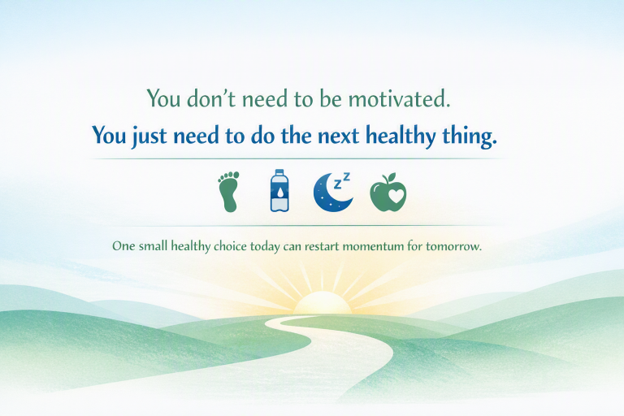
10. Remember: Consistency Beats Motivation
The healthiest people are not motivated every day. They simply continue their routines even when motivation is low.
A useful mid-year reminder:
A happiness-focused mid-year check-in is a great starting point because it helps you identify not only how healthy you are, but also how you want to feel. A medical program like Vibrance by Hometown can then help turn those insights into a personalized, sustainable health plan.