
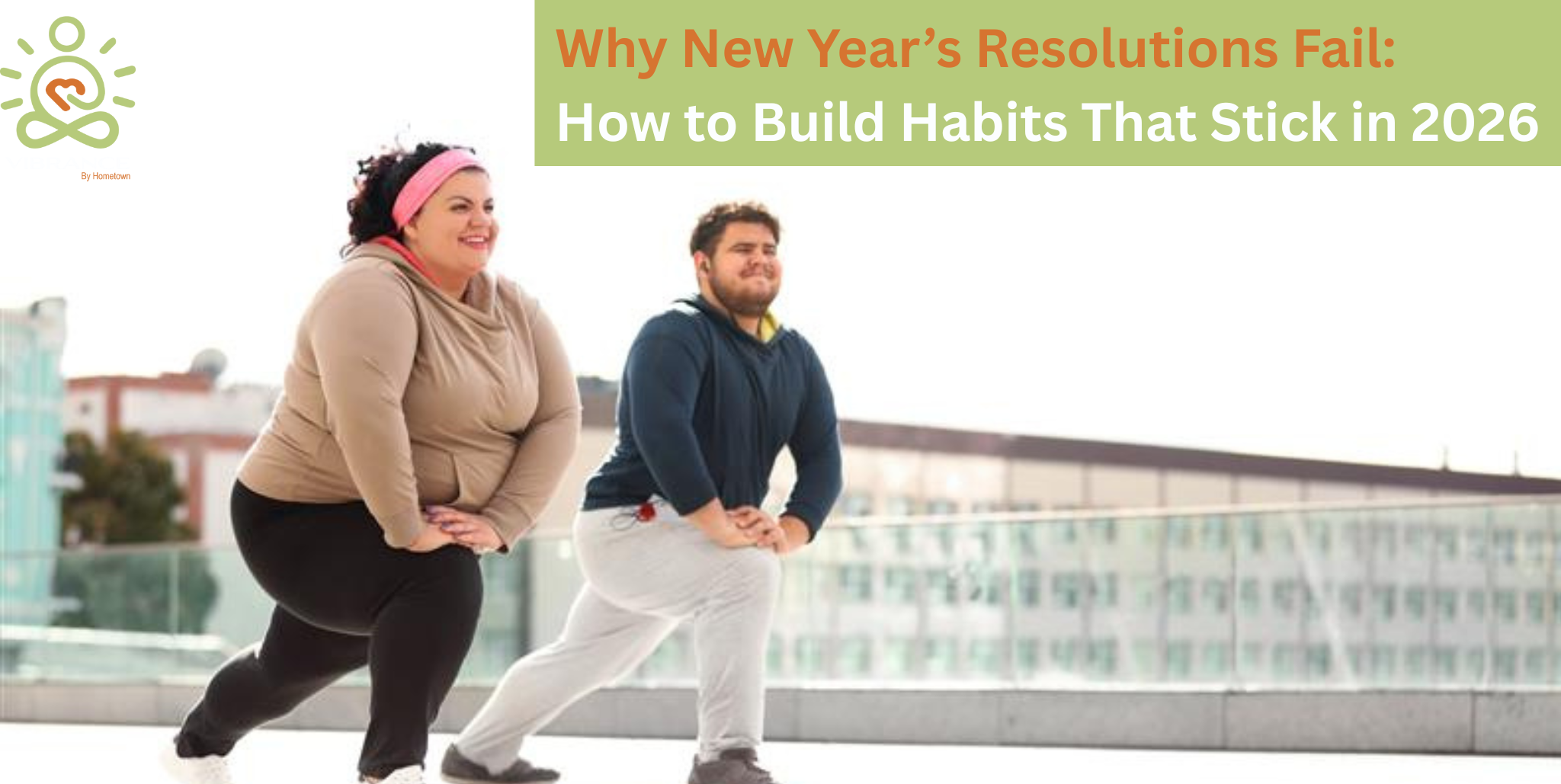
The start of a new year often brings renewed motivation. Many people set ambitious New Year’s resolutions, especially around health and weight loss. Unfortunately, most resolutions fade long before February. If you have struggled to stay on track in the past, you are not alone. The good news is that with the right approach, you can build habits that last and make meaningful progress in 2026.
At Vibrance by Hometown, we believe that successful habits are not about extreme changes or rigid rules. They are about consistent, realistic actions that become part of your daily life. Here’s why resolutions often fail, and how to turn goals into sustainable habits.
- Why Resolutions Often Fail
Unrealistic Expectations
Many New Year’s resolutions start with a dramatic goal, like losing a large amount of weight quickly. Research shows that overly ambitious goals often lead to disappointment and frustration because they do not match individual lifestyles or capacities.
Lack of a Clear Plan
Goals like “get healthier” or “lose weight” are too vague to guide daily choices. Without specific steps, it is hard to know exactly what to do each day.
Trying to Change Too Much at Once
Making multiple major changes at the same time can be overwhelming. The effort needed to sustain too many new behaviors at once often leads to burnout.
All-or-Nothing Thinking
When a setback occurs, like skipping a workout or eating a treat, people often feel they have “failed” and abandon their goal entirely. This mindset undermines long-term success.
- The Science of Habit Formation
Understanding how habits form can help you build strategies that stick. Research suggests that habits form gradually through repetition and consistent context cues. Focusing on small changes repeated daily can lead to meaningful long-term results.
A habit loop typically includes:
- Cue: A trigger that reminds you to act
- Routine: The behavior itself
- Reward: A benefit that reinforces the behavior
This structure helps behaviors become automatic over time.
- Build Habits That Stick in 2026
Here are evidence-based strategies to make durable changes:
Make Specific, Actionable Goals
Turn broad intentions into clear behaviors. For example:
- Instead of “eat healthier,” choose “add a serving of vegetables to two meals per day.”
This type of specificity makes it easier to take action.
Start Small and Be Consistent
Break big changes into small steps. Small actions repeated daily are more likely to become habits than large, sporadic efforts.
Use Triggers to Create Routine
Pair new behaviors with existing habits. For instance, do short stretches after brushing your teeth in the morning or take a brief walk after lunch.
Track Progress
Tracking your behavior increases awareness and accountability. Journaling, apps, or simple checklists can help you visualize progress over time.
Focus on Process, Not Perfection
Value the effort you put in each day, even if the outcome is not perfect. Staying consistent over time matters more than perfection on any single day.
- Why Support Matters
Support from others improves the likelihood of success. A review of behavior change research found that accountability, whether through coaching, groups, or social support, significantly improves outcomes.
At Vibrance by Hometown, our team provides personalized guidance that goes beyond tracking weight. We help you identify barriers, reinforce progress, and adapt your approach as you develop lasting habits.
- Focus on Lifestyle Patterns, Not Quick Fixes
Quick fixes and fad trends may produce short-term results, but they rarely lead to lasting change. Sustainable success comes from developing patterns that support long-term health, such as balanced eating, regular movement, adequate sleep, and stress management.
Instead of focusing on short bursts of motivation, aim for daily routines that align with your values and long-term goals.
- Celebrate Small Wins and Adjust When Needed
Habits grow over time, and every small step forward counts. Celebrate progress, even seemingly minor improvements, because they reinforce your capacity to change and build confidence.
If a strategy is not working, reassess and adjust. Flexibility allows progress to continue without discouragement.
Start 2026 With Sustainable Habits
Resolutions fail when they are goals without a roadmap. Sustainable habits form when actions are small, specific, consistent, and supported. With the right strategies and support, 2026 can be the year your goals become real, long-lasting habits.
If you want personalized support on your wellness journey, consider a consultation with a Vibrance provider. Your path to sustainable health starts with intention, consistency, and support.